Eventually, You Have to Try Something: A Sustainable Rhythm for Church Replanting
My husband Chris and I arrived in Castlecliff at the beginning of 2020, with the intention of beginning to dream with God around replanting a small Anglican church called St. Luke’s.
Annoyingly, shortly after we arrived, so did COVID-19, which forced us to spend a year and a half going deep with our team and spending time in prayer and in building the small amount of neighbourhood relationships we did have access to.
But eventually you have to try something.
Some of the best advice we received enabled us to try initiatives in our church space in a sustainable and attainable way, in an action/reflection sequence which can translate across different initiatives. The sequence really boils down to this: pray, plan, do briefly, then debrief. Not exactly rocket science. But manna from heaven in a time of ‘what on earth are we doing here’ overwhelm.
Our team already had a rhythm of daily prayer, so that bit was relatively straightforward. I will add, though, that we didn’t pray UNTIL we received divine instruction; we did it (and still do) as an act of discipline. Our prayer rhythm laid the spiritual foundation of everything that would come out of the church, and it created intentional space to keep listening to God WHILE we planned things to try. Then we would try something together, which was short-term - things like a school term of community dinners, soup nights for the winter, a CAP course, five weeks of a Lent discipleship group. This way, if the initiative wasn’t working well, or wasn’t enabling connection with the neighbourhood in a way that was sustainable long term, then it had a natural endpoint which was clear and mana-preserving. But if it went well, it left the neighbourhood wanting more. Even when we decided to try doing ‘proper’ church worship services, we framed them up as a series of five Advent services, ending with a big community Christmas celebration in collaboration with another local church. This went so well that we launched a weekly service the following February. Every try of something was followed by lots of honest debrief (the community meals, which we had predicted to be a sure-fire winner, were an absolute disaster, and it was really unburdening to talk about it openly as a team and to laugh together) and more prayer. Also, it’s worth noting that when you pray, the Holy Spirit moves in ways you won’t expect (which sounds cliché, I realise). What no one warned me was that it would be pretty frustrating – what do you mean my nicely laid community event plan is actually leading NO ONE to deeper life with Jesus and is actually going a bit wonky? What do you mean we have to go back to the drawing board in humility and listen for something fresh from the Holy Spirit? What do you mean my neighbours think my really great idea for this community is a bit ‘meh’? We had to keep asking ourselves where Jesus was leading us with this idea, not where the idea was leading us.
Another challenge in this sequence was to not get caught up in the administration of the thing that we were trying and instead focus on staying present to God – both in the leadup, and during the thing. To notice who was turning up, who was stepping up to help, to follow up those connections, and to try to stay unafraid of asking our neighbours what they hoped to experience in the church space. We still haven’t got it all nailed down, but with every year we’re deepening these as we partner with God together.
Five years on, we have a small but steady congregation of between 40-50 on a Sunday if everyone attends. It’s wild, happy, chaotic, with kids, old people, dogs and lots of crumbs everywhere from Jenny’s famous scones. We pray and sing and take communion together. Most weeks, someone asks for prayer. We have an incredible team who have heard the dream, who have listened to God and responded. We have neighbours with stories of mind-blowing Jesus
transformation, and a village of people around our church, some of whom have relocated to love this neighbourhood along with us (including two flats from the Dio – cheers guys!). We are blessed, even if we’re not what the history books would call a roaring success story, but I hope it’s encouraging anyway.
I want to encourage those in a similar boat to not let urgency steal the replanting moment from you. Pray, plan together, try something, then listen to each other and to the Holy Spirit, asking what’s next and hearing for direction together. Let me know how you get on.
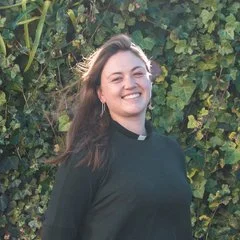
Chelsea is married to Chris, they have two kids, and together they are priests-in-charge at St. Luke’s Anglican church in Te Kaihau-o-Kupe/Castlecliff, Whanganui (part of the wider Anglican Parish of Whanganui, or Whanganui Anglicans). Their church was replanted in 2022 by an Urban Vision team, which Chelsea still co-leads. They love living, ministering and neighbouring in this beautiful, diverse, challenging, interesting neighbourhood by the sea.